EU Crypto Transaction Ban Begins: What Binance Restrictions Mean for Liquidity and Volatility
The EU's 21st Russia sanctions package takes effect for its crypto-related transaction restrictions on 23 August 2026. The Council of the EU says the package adds 14 crypto-related service platforms based in several third countries to a transaction ban. Binance has separately told users it will stop processing transactions involving 11 crypto-asset platforms from the same date.
The immediate takeaway is operational, not a prediction that Bitcoin or every named token must fall: EU users and counterparties may face changed transfer routes, venue restrictions, and less predictable liquidity. This is a regional sanctions and access event. It is not the same thing as a global Binance delisting, and the sources reviewed do not establish a market-wide shutdown.
Direct answer: If you are an EU person or operate through an EU-regulated entity, verify whether a counterparty, platform, wallet route, or transfer is covered before sending funds. Do not assume that a restriction on dealings with a service platform makes its associated token untradeable everywhere.
This is educational market journalism, not personal financial advice.
What changed on 23 August?
The Council of the EU announced its 21st package of restrictive measures on 23 July. Its crypto section says the EU is extending a transaction ban to 14 crypto-related service platforms in Georgia, Panama, the United Arab Emirates, the Marshall Islands, Kyrgyzstan, and Belarus. The release also introduces the possibility of a full third-country ban for crypto-asset services where a provider is used to help Russia evade EU sanctions.
Binance posts surfaced in the research say the exchange will restrict processing of transactions involving 11 crypto-asset service providers starting 23 August. The overlap between the EU's 14-platform list and Binance's 11-platform list should not be inferred without checking the underlying legal annex and Binance's complete notice. This article therefore does not publish an unverified name-by-name mapping.
The legal scope matters. A Council transaction ban is directed at dealings covered by the EU sanctions framework. Binance's operational response is a venue policy. Both can affect access and settlement, but they are not a single global delisting decision.
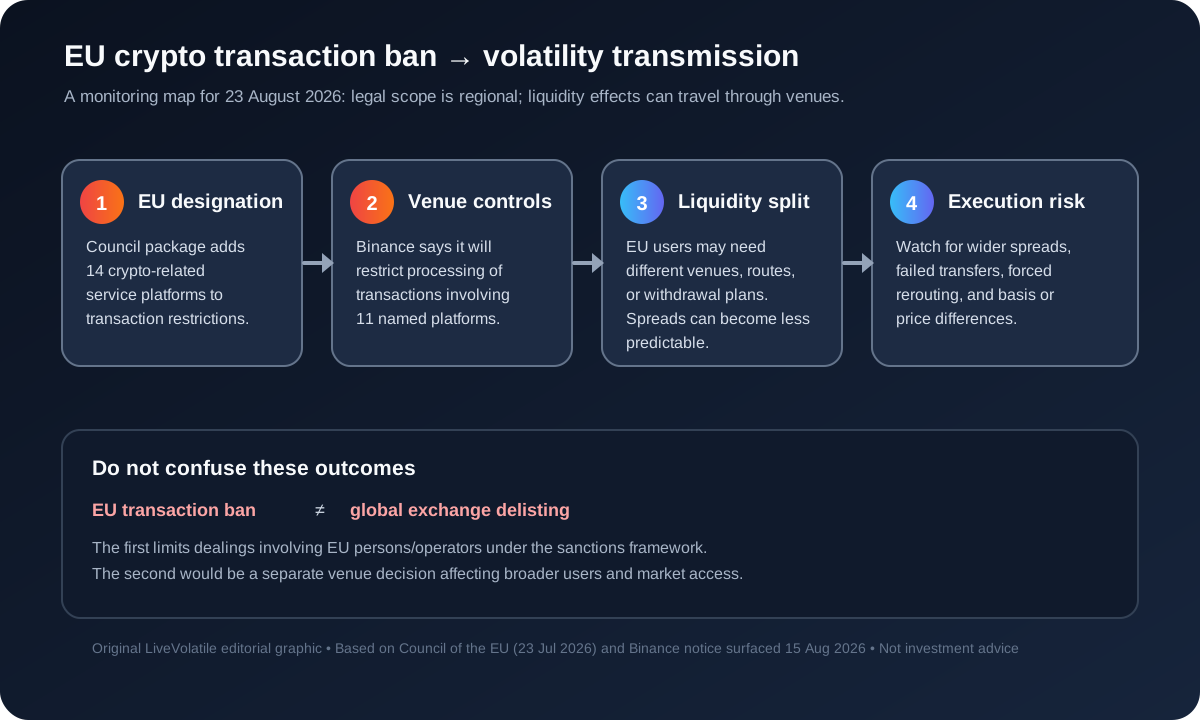
Figure 1. Original LiveVolatile editorial graphic: the possible transmission path from a regional legal restriction to venue controls and execution risk. It is based on the Council of the EU press release and the Binance notice cited below; it does not claim that every step occurs for every asset.
EU transaction ban versus global delisting
These terms describe different events:
| Event | What it can restrict | What it does not prove by itself |
|---|---|---|
| EU transaction ban | Dealings involving EU persons, entities, or operators covered by the sanctions rules | That a token is delisted worldwide or that all non-EU users lose access |
| Binance processing restriction | Binance's handling of transactions connected to named platforms under its notice | That Binance has delisted every asset associated with those platforms |
| Global exchange delisting | A venue removes a token or market for a broad user base | That the legal restriction automatically applies to every venue or jurisdiction |
This distinction is more than wording. A user can encounter a blocked transfer while the associated token still has a quoted market elsewhere. Conversely, a token can remain listed while its deposit, withdrawal, or counterparty route becomes harder to use. The relevant risk may be settlement and exit friction rather than an immediate spot-price collapse.
How sanctions can transmit into crypto volatility
1. Transfer routes become less interchangeable
When a venue or service provider is restricted, users may reroute through another exchange, a self-custody wallet, or a different settlement path. Every route has its own chain support, compliance checks, minimums, memo requirements, and processing times. A failed or delayed transfer can create forced timing decisions, especially when a position is leveraged.
2. Liquidity can fragment by region and venue
A market price is only useful if a trader can execute at a comparable price. If some participants lose access to a route, order flow can split across venues. That can show up as wider spreads, thinner visible depth, larger slippage, or temporary differences between regional markets. Those are risks to monitor, not guaranteed outcomes from the sanctions announcement.
3. Derivatives can react before spot markets
Perpetual swaps and futures may reprice when traders anticipate reduced access, higher basis risk, or a more difficult exit. Funding, open interest, and liquidation clusters can amplify a move. However, no verified derivatives statistic was found in the primary sources reviewed for this article, so this piece does not assign a leverage figure or claim a specific liquidation event.
4. Compliance risk can become execution risk
A user who cannot verify whether a counterparty is covered may pause a transfer or discover that a venue rejects it. The safest response is not to try a series of improvised routes. Check the exchange's current notice, the applicable sanctions guidance, and the destination network before initiating anything.
What EU users should monitor
- Your jurisdiction and status: Determine whether you are an EU person, entity, or operator subject to the relevant rules. If uncertain, obtain qualified legal or compliance advice.
- The exact platform name: Match the platform against the Council's legal annex and the exchange's own notice. Do not rely on a screenshot or a social-media list.
- The service, not only the token: A transaction restriction can concern a service provider or counterparty. It does not automatically answer whether an unrelated venue may list the same asset.
- Deposit and withdrawal rules: Confirm the chain, address format, memo or tag, minimum amount, processing time, and whether the receiving venue accepts the asset.
- Liquidity before execution: Check spread and order-book depth at the moment of the trade. A displayed price is not a guarantee of executable size.
- Records: Keep the official notice, timestamp, transaction ID, and compliance correspondence. This helps distinguish a sanctions-related rejection from a wallet or network error.
Do not send funds to a new intermediary merely because it appears in a forwarded “workaround.” Sanctions changes create a phishing surface. Never share a seed phrase or private key, and do not sign a transaction you cannot understand.
What this means for volatility traders
The most defensible trading conclusion is to treat the event as a market-access and liquidity catalyst rather than a directional call. A useful monitoring dashboard should compare:
- regional spot prices for the same asset;
- bid-ask spread and executable depth across venues;
- deposit and withdrawal status by chain;
- futures basis and funding, where the data is independently verified;
- stablecoin and fiat on-ramps available to the trader's jurisdiction; and
- announcements from affected venues and regulators.
A spread widening without a corresponding broad market move may indicate venue-specific friction. A market-wide move needs separate evidence, such as a macro catalyst, large liquidations, or a confirmed change in major exchange access. Avoid attributing every August 23 price move to the sanctions package without that cross-check.
For broader context, readers can use the LiveVolatile blog, review Bitcoin volatility data, open the Bitcoin coin page, and compare assets in the cryptocurrency volatility comparison. These are monitoring resources, not recommendations.
FAQ
Is Binance delisting the 11 platforms' tokens globally?
The sources reviewed support a restriction on processing transactions involving 11 crypto-asset service providers from 23 August. That is not enough to claim a global delisting of every token associated with them. Check the current Binance notice for the exact scope and any later updates.
Does the EU ban apply to every crypto exchange?
No automatic global conclusion follows from the Council's release. The transaction ban operates within the EU sanctions framework and the exchange response is venue-specific. Users must assess their jurisdiction, counterparty, service, and transaction rather than generalize from a headline.
Will Bitcoin and Ethereum crash because of the ban?
That outcome is not established by the sources. The event can create access, settlement, and liquidity risks for affected routes, but the direction and size of any market move require live price, depth, and derivatives evidence. Do not treat the sanctions date as a standalone price target.
What should I do if a transfer is rejected?
Do not repeatedly reroute funds or use an unverified intermediary. Save the error, timestamp, transaction details, and official venue response. Check whether the asset, chain, counterparty, or jurisdiction is covered, and seek qualified compliance or legal advice when necessary.
Sources and confidence
- Council of the EU: 21st package of sanctions, press release dated 23 July 2026. High confidence for the package's stated scope, 14 crypto-related platforms, and the third-country crypto-service instrument.
- Binance Square: transaction restrictions involving 11 crypto platforms, surfaced in search as dated 15 August 2026. Medium confidence until the full Binance notice is directly readable; claims are limited to the reported restriction and are not expanded into an unverified platform/token list.
- Congress.gov: H.R. 3633 actions, checked for regulatory context. Not used as evidence for the sanctions event.
Visual credit: Figure 1 is an original AI-free, hand-authored SVG diagram created for LiveVolatile and saved at /images/articles/eu-crypto-sanctions-binance-volatility-map-2026-08-23.svg. Its claims are limited to the cited sources and clearly labeled as a transmission model, not observed market data.
Educational disclaimer
Crypto markets carry substantial risk, including price volatility, custody risk, liquidity risk, counterparty risk, regulatory risk, and loss of access. This article is for education and market monitoring, not personalised financial, legal, tax, or compliance advice. Verify current rules and venue notices before acting.